Binaural Beats: Sound Technology for Deep Meditation
Binaural beats blend simple sound frequencies with the natural rhythms of the brain. Many meditators use them to settle the mind, deepen awareness, or ease into relaxation. This article explains what they are, how they work, and what people often experience when using them.
What Are Binaural Beats
Binaural beats are an auditory illusion created when two slightly different frequencies are played separately into each ear. The brain does not simply hear the tones. It generates a third internal beat equal to the difference between them. Research shows that this internal beat can influence mood, attention, and relaxation [1][2].
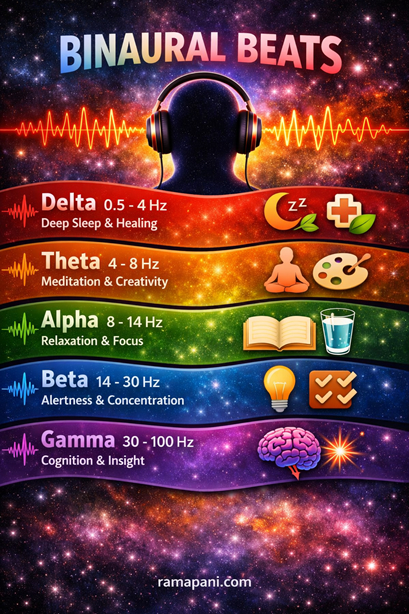
Different frequency ranges are associated with different mental states. These ranges are often used in meditation and relaxation practices [3].
- Delta (1 to 4 Hz): deep sleep and restoration
- Theta (4 to 8 Hz): meditation and intuition
- Alpha (8 to 13 Hz): calm focus and creativity
- Beta (13 to 30 Hz): alertness and concentration
- Gamma (30 to 100 Hz): alertness and concentration
Studies suggest that binaural beats may reduce anxiety, support emotional regulation, and improve cognitive performance, although effects vary between individuals [4][5].
How to Use Binaural Beats in Meditation
Meditators often use binaural beats as a preparation tool that helps the mind settle before entering silence. Others prefer to keep the sound playing throughout the session to maintain a steady inner rhythm.
Use Headphones
Binaural beats only work when each ear receives a different tone. Comfortable headphones make a noticeable difference (the effect can work in a room with a decent stero system, but it certainly won't work on your smart phone without headphones!).
Choose Your Intention
Different frequencies support different states. Theta is helpful for deep meditation. Alpha supports relaxed awareness. Delta encourages profound rest.
You can choose from a series of presets in the app below, or find your own.
Keep the Volume Low
Gentle sound works best. The goal is subtle entrainment rather than stimulation.
Start With Ten to Fifteen Minutes
Most people feel the shift gradually. Short sessions before meditation can be surprisingly effective [6].
Pair With Breath or Mantra
Many practitioners combine binaural beats with breath awareness, mantra repetition, or body scanning. This creates a stable inner rhythm that supports deeper stillness [7].
What People Commonly Notice
Reduced Anxiety
Several studies report reductions in state anxiety after listening to theta or delta binaural beats [8].
Improved Focus
Alpha and beta beats may help with clarity before work or study. Research shows improvements in sustained attention and working memory in some participants [9].
Enhanced Creativity
Some frequencies such as 10 Hz are linked to divergent thinking and idea generation [10].
Deeper Meditation
Many people describe entering meditation more quickly or staying centred for longer. The rhythmic quality of binaural beats helps maintain a steady mental state [11].
Mixed Results
Sensitivity varies. Some feel strong effects while others notice very little. Both experiences are normal [12].
I personally like to drop the base frequnecy to very low ~55Hz for best results.

 Support me on Patreon



 Subscribe without emails | RSS Feed
