Diwali 2026 and the Buddhist Path: Lighting the Lamp Within
They say Diwali is the festival of lights. Yet is it simply about the lamps and the fireworks? For me, Diwali is a celebration of triumph: of good over evil, and of wisdom over ignorance.
To find the date of Diwali, try our Diwali Date Finder.
What Is Diwali
Diwali, also called Deepavali ("row of lamps"), is a five-day festival of light celebrated by Hindus, Sikhs, Jains, and some Buddhists [1]. Hindus remember Rama's return home to Ayodhya and honour Lakshmi, Sikhs mark Bandi Chhor Divas [1], Jains remember the nirvana of Mahavira, and Newar Buddhists in Nepal celebrate their own festival of lights, Swanti [2]. Homes are cleaned, rangoli patterns are drawn on doorsteps, clay lamps are lit, and sweets are shared with neighbours.
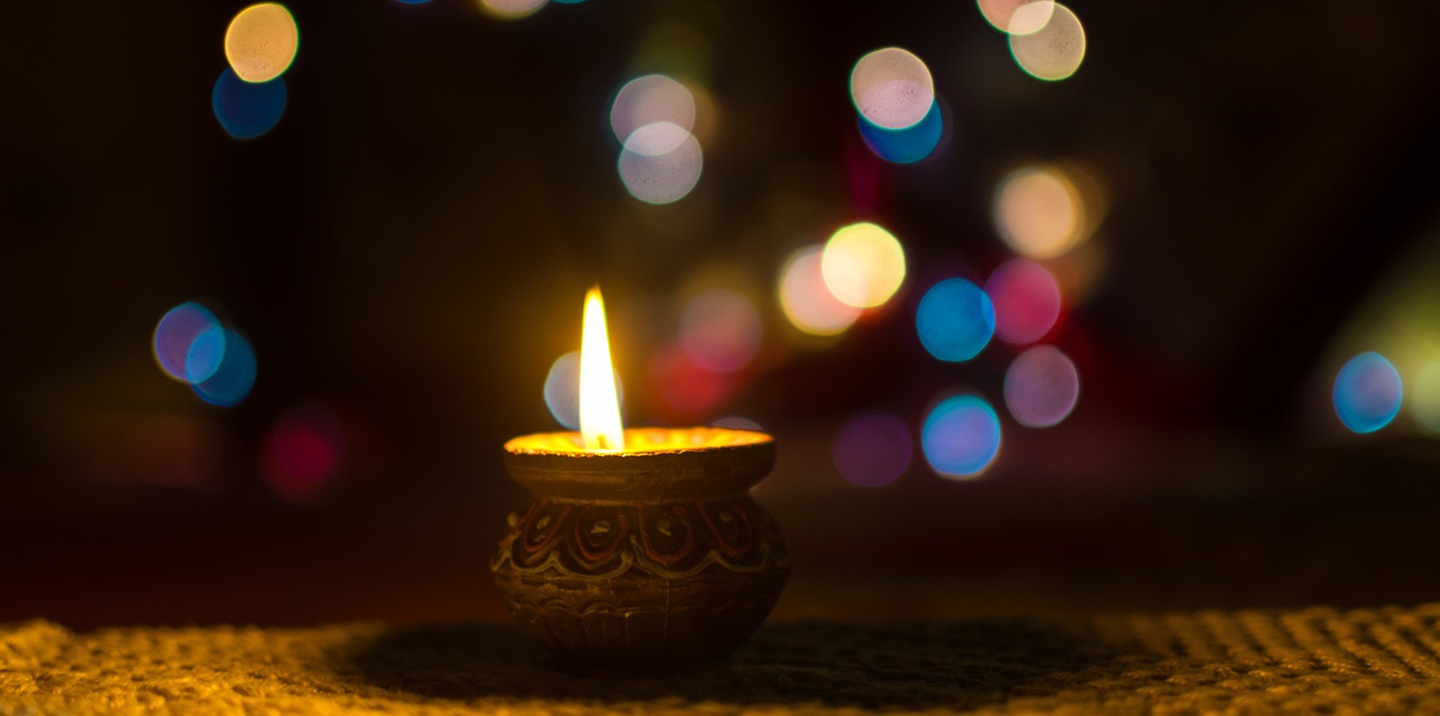
Even for those of us who do not celebrate Diwali, its message speaks to something we all experience. At its heart, Diwali is about light overcoming darkness. The candles and fireworks point beyond themselves, towards the light within us. And the darkness lives much closer to home than any evil force out in the world. It is made of the parts of ourselves we often ignore:
- laziness,
- selfishness,
- misunderstanding,
- and forgetfulness.
When Is Diwali 2026
The main day of Diwali 2026 falls on Sunday 8 November, with the wider festival running from Friday 6 to Tuesday 10 November [1][3]. Diwali follows the lunar calendar, landing on the new moon of the month of Kartika, so its date moves each year. Many community events are held on nearby weekends too, so local dates can differ.
- Friday 6 November: Dhanteras
- Saturday 7 November: Naraka Chaturdashi (Choti Diwali)
- Sunday 8 November: Diwali and Lakshmi Puja
- Monday 9 November: Govardhan Puja
- Tuesday 10 November: Bhai Dooj
Can Buddhists Celebrate Diwali
Yes. Buddhism has no rule against joining in with the festivals of our neighbours, and the meaning of Diwali sits very comfortably alongside the Dharma.
Some Buddhists already celebrate it. In Nepal, Newar Buddhists mark the festival as Swanti [2], and during it hold Mha Puja, a ritual honouring one's own body and life [4]. Few festivals anywhere ask us to bow to ourselves, and it is a lovely thought: the light we seek is already inside.
Light is also woven through Buddhist practice. Lamps are offered on shrines across the Buddhist world, from butter lamps in Tibetan temples to candles at Theravada vihara [5]. In his final days, the Buddha told his followers to be a lamp unto themselves (the Pali word dipa can mean both lamp and island) [6]. And Buddhism names ignorance (avijja) as a root of suffering. Wisdom over ignorance is the very heart of the path.
So when Buddhists light a lamp at Diwali, we honour our neighbours' festival and our own teaching together.
The Darkness in Our Daily Lives
Look at our daily lives. Perhaps we have had moments of feeling overwhelmed, by pressure or by expectations, by our friendships, or simply by trying to keep up with it all.
Perhaps we have said something we did not mean, or held onto a grudge for longer than we should have. Perhaps we have felt as if we were just "going through the motions", forgetting why we were doing any of it at all.
Diwali reminds us to wake up from that forgetfulness. The word Buddha itself means "one who has woken up". Diwali is a chance to reset and remember. To clean out our minds as well as our rooms and homes. To let go of what weighs us down and make space for what lifts us up.
Buddhist Practices for Diwali
Here are some simple ways a Buddhist can mark the season, each one a way of working with the darkness within us.
1. Offer a Lamp with Intention
There is an old Buddhist story of a poor woman who could only afford a tiny lamp to offer the Buddha. When dawn came, every grand lamp offered by the king had burned out, but hers was still glowing, because it was lit with a pure heart [7][5]. On Diwali night we can light a single candle or clay lamp on our shrine, a windowsill, a bookshelf, or the kitchen table, and set an intention as we strike the match. The size of the flame matters far less than the heart behind it.
2. Clean as a Meditation
Cleaning the home before Diwali is a tradition, and in Zen monasteries cleaning is practice in its own right [8]. Sweep slowly. Wipe each surface with full attention. As the dust goes, we can let some laziness go with it, along with old clutter, unopened post, odd socks, and that drawer of mystery cables.
3. Let Go of a Grudge
The darkness of selfishness often hides inside the grudges we carry. During Diwali we can practise loving-kindness (metta): wish ourselves well first, then someone we love, then someone neutral, then the person we are struggling with, and finally all beings [9]. If we are ready, we might send a message or make a call to mend what was broken.
4. Give Freely
Generosity (dana) is the first of the Buddhist perfections [10], and Diwali is a festival of giving. Sharing sweets with neighbours, donating to a food bank, offering our time, or giving away the last samosa all count. Every act of giving loosens the grip of selfishness.
5. Look in the Mirror
Inspired by Mha Puja [4], we can spend a few minutes honouring our own life. Sit before a mirror, light a lamp beside it, and reflect on the potential for awakening that lives within each of us. Where have we misunderstood ourselves or others this year? What would wisdom do instead?
6. Dedicate the Merit
Buddhists often close a practice by sharing its benefit with all beings. As the lamps burn down, we can dedicate the good of our Diwali to everyone, near and far, who is searching for light in their own darkness.
The Light That Survives
And so the story of Diwali reminds us that even in the deepest night, the smallest flame can guide us home. It also reminds us never to let the darkness win. The darkness is within each of us. So is the light.
Our paths may differ. Some of us follow another faith, and some of us follow none at all. In the end, light is light. Diwali celebrates the light that survives in the darkness, and that light belongs to all of us.
References
[1] Turver, James (2026). “Diwali Fireworks UK: The Complete 2026 Guide.” Galactic Fireworks.
[2] Wikipedia contributors. “Swanti (festival).” Wikipedia.
[3] HinduTone (2026). “The 5-Day Diwali Festival in the UK 2026: Dhanteras to Bhai Dooj.” HinduTone.
[4] Pokharel, Sanskriti (2025). “Mha Puja has adapted, but its essence remains.” The Kathmandu Post.
[5] Fo Guang Shan International Translation Center. “Lamp Offering.” FGSITC.
[6] SuttaCentral Discussion Forum. “Which is better: lamp or island?” SuttaCentral.
[7] 84000: Translating the Words of the Buddha. “The City Beggar Woman” (Toh 205). 84000.
[8] Diamond Sangha. “Samu/Work Practice.” Palolo Zen Center.
[9] The Buddhist Centre. “Loving-kindness meditation.” Triratna Buddhist Community.
[10] Bhikkhu Bodhi (ed.). “Dana: The Practice of Giving.” The Wheel Publication No. 367, Access to Insight.
Ram, , Leeds
🌿 Our practice deepens not only through meditation, but also through understanding. These articles offer reflections, guidance, and teachings to support your journey.
I Ching | Beginner Guide Why Meditate? A Practical Guide to Meditation Sound Meditation: A Complete Guide The R.A.M.A. Mnemonic Binaural Beats
✨ Looking for something else?
Introduction to Buddhism Buddhism Doesn't Come With a Biscuit Watching a Live Stream World Karma Game
✨ Lost? Visit the Table of Contents or search the tag cloud.

 Support me on Patreon



 Subscribe without emails | RSS Feed
