Mothers' Night: Modraniht, the Ancient Night of the Mothers
Long before Christmas Eve belonged to carols and stockings, the English kept it as something else entirely. They called it Modraniht, the Night of the Mothers, and they stayed awake all night in honour of the mothers. Then the details were lost, and all that survived was a single sentence written by a monk in AD 725.
This is the story of that sentence, of the mothers it names, and of how we can bring their night back. To celebrate at home, download our free Mothers' Night Guide.
What Is Mothers' Night
Mothers' Night, in Old English Modraniht, was a midwinter festival of the pagan English. It fell on the night we now call Christmas Eve and lasted from dusk until dawn, in honour of a group of mothers whose identity the record no longer tells us [1][2].
Few festivals have so large a modern following and so small an ancient record. Everything we know directly comes from one sentence in a treatise on calendars, written by a Northumbrian monk who had every reason to say as little as possible about pagan worship. That sentence has carried a remarkable weight. Historians have tied it to altars raised to mother goddesses across the Roman frontier, and heathens, Neo-Pagans, Wiccans, and families looking for a midwinter tradition of their own have built living celebrations on it.
Here we set out the evidence plainly. Where the record falls silent, we say so. Where we reconstruct, we label the reconstruction as ours.
Bede's Single Sentence
The Venerable Bede (c. 673 to 735) spent almost his whole life at the twin monastery of Wearmouth and Jarrow in Northumbria. In 725 he completed De temporum ratione (The Reckoning of Time), a handbook on calendars and the calculation of Easter [1]. Its fifteenth chapter, "On the English months", records the names the pagan English gave their months before their conversion. After explaining that both December and January were called Giuli (Yule), Bede writes:
Incipiebant autem annum ab octavo calendarum Ianuariarum die, ubi nunc natale Domini celebramus. Et ipsam noctem nunc nobis sacrosanctam, tunc gentili vocabulo Modranecht, id est matrum noctem, appellabant, ob causam, ut suspicamur, ceremoniarum quas in ea pervigiles agebant.
In our translation:
They began the year on the eighth day before the kalends of January, where we now celebrate the birth of the Lord. And that very night, now so holy to us, they then called by the heathen word Modranecht, that is, "night of the mothers", because, as we suspect, of the ceremonies they performed while keeping watch through it.
The standard English translation, by Faith Wallis, renders the key phrase "mothers' night" [2][3]. Four details in the passage shape everything that follows:
- The tense. Bede writes appellabant, "they used to call". The conversion of the English began with Augustine's mission of 597 and reached Northumbria in 627, so Bede is describing a custom about a century in the past, within reach of family memory.
- The vigil. The word pervigiles describes people who stay awake through the night. This is the one concrete detail of practice Bede gives us.
- The guess. "As we suspect" (ut suspicamur) shows that Bede did not know the ceremonies himself, or chose not to describe them.
- The company it keeps. In the same chapter Bede links the months Hrēþmōnaþ and Ēosturmōnaþ to goddesses named Hretha and Eostre. Modraniht belongs to a wider pagan year that Bede chose to preserve, however briefly.
Mothers, Plural
Bede's Modranecht represents Old English mōdra niht. The first word, mōdra, is the genitive plural of mōdor, "mother", and Bede's own Latin gloss confirms it with the plural matrum [2][4]. The festival honoured mothers in the plural, which is why we write "Mothers' Night" with the apostrophe after the s.
The difference is one small apostrophe, and it changes everything: this was a night for many mothers, honoured together.
When Is Mothers' Night 2026
Bede places the night at the start of the year, on the eighth day before the kalends of January, which is 25 December. The night he means is the one leading into that day. Tacitus noticed centuries earlier that the Germanic peoples reckoned their time by nights, so that each night led its day [5]. A festival on "the night" of 25 December therefore began at dusk on the 24th.
The date carries a second meaning that is easy to miss. When Julius Caesar reformed the Roman calendar, 25 December was fixed as bruma, the winter solstice, and Pliny the Elder still gives that date for it in the first century AD [6]. By Bede's day the calendar had drifted and the true solstice fell several days earlier, yet 25 December kept its traditional standing as midwinter. Modraniht sits on Christmas Eve and on the old Roman solstice at the same time.
Some writers raise a fair objection. Bede also tells us that the English counted their months by the moon, and a lunar year cannot begin on the same solar date every year. Perhaps the pagan festival moved with the moon, and Bede or his informants mapped it onto the Christian calendar [7]. The safest reading is that Modraniht belonged to midwinter, at or near the solstice. That gives both modern dates a fair claim:
- Sunday 20 December 2026: the eve of the Winter Solstice, which falls at 20:50 GMT on Monday 21 December [16]. Favoured by many Neo-Pagans as the opening of the Yule season.
- Thursday 24 December 2026: Christmas Eve, Bede's own date. Favoured by many heathens and reconstructionists, and by families who keep it alongside Christmas.
Some groups mark Mothers' Night as the first of the twelve nights of Yule, and others keep it as a single night leading into the festival. Both follow the logic of the sources.
Who Were the Mothers
Bede does not say who the mothers were. Scholars have proposed several candidates, and they overlap more than they compete.
The Matronae of the Roman Frontier
The strongest comparison comes from the cult of the Matres and Matronae, "Mothers" and "Matrons", known from votive altars across north-western Europe in the Roman period. The oldest dedications date from the mid-first century AD in southern Gaul, and the densest cluster lies in the lower Rhineland around Cologne and Bonn, where the shrine of the Matronae Aufaniae stood [8].
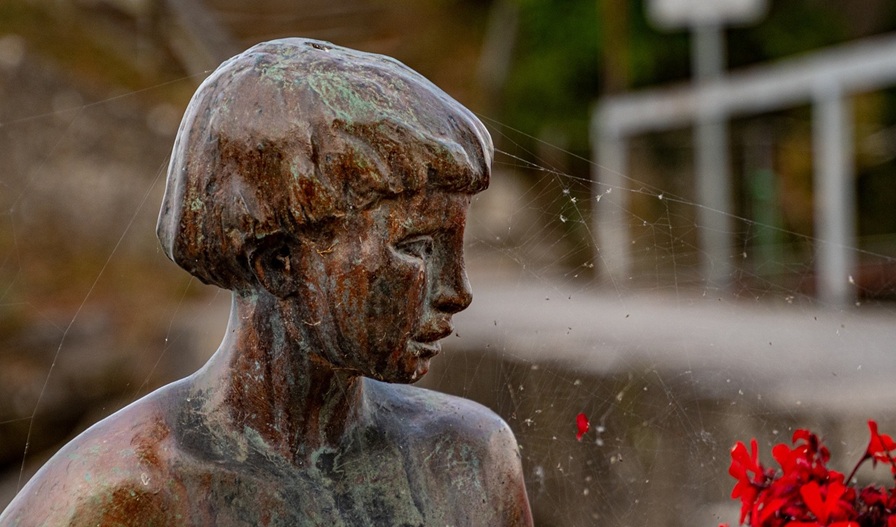
The Rhineland altars usually show three seated women. The two outer figures wear large round headdresses, and the central figure is often younger, with her hair loose. Fruit and animals appear among their attributes. Several dedications thank the Mothers for help received, which suggests protective beings who watched over a family or community.
The Mothers came to Britain with the Roman army. One altar, probably from Hadrian's Wall and now in the Great North Museum in Newcastle, is dedicated Matribus Germanis, "to the German Mothers", by a man called Marcus Senecianius [9]. Another, from Heronbridge near Chester, was raised to the Mother Goddesses Ollototae by Julius Secundus and Aelia Augustina [10]. The Mothers were honoured on British soil centuries before the first English settlers arrived.
Rudolf Simek associates Modraniht with this matron cult [11], and Philip Shaw argues that the matron inscriptions partly confirm Bede's account, so his evidence for English pagan religion deserves more trust than it often receives [12]. There is a gap, though. The altars fade out by the fifth century, and Bede wrote in the eighth. The connection is a strong hypothesis, resting on shared names and shared ideas, and it remains a hypothesis.
The Dísir of the North
A second line of comparison runs to Scandinavia. Old Norse sources speak of the dísir, female spirits connected with family and fate, and of the dísablót, a sacrifice made to them. Simek treats Modraniht as a bridge between the continental matron cult and these later Scandinavian rites [11]. The Norse sources are centuries younger than Bede and place the dísablót at other seasons, so the link concerns the kind of beings honoured more than the date.
Goddesses and Ancestors
Modern interpreters often name particular goddesses among the Mothers, such as Frigg, the wife of Odin, who is linked with motherhood and foresight in the Norse sources. Nothing in Bede supports any single name. What the evidence does support is a festival for a collective of female powers who watched over families. Whether those powers were goddesses, ancestral mothers, or both at once, we cannot say. Some inscriptions honour the Matres Paternae, the "ancestral Mothers", which shows that the line between divine mothers and the mothers of our own family was already a soft one in Roman times.
- The Matronae: the strongest comparison, with hundreds of altars and mothers shown in groups, but a gap of about three centuries.
- The dísir: a plausible kinship of ideas, with different dates and a later record.
- Female ancestors: fits the plural name and the Norse toasts to the dead, and remains unproven.
- A single named goddess: popular in modern practice, with no support in Bede.
What Happened on Mothers' Night
Bede gives us one fact about practice: the ceremonies lasted through the night and people stayed awake for them. Everything else in this section is reconstruction from neighbouring traditions, offered as informed speculation.
The Midwinter Feast in the North
The fullest description of a pagan midwinter feast in the Germanic world comes from Snorri Sturluson's Saga of Hákon the Good, written in Iceland around 1230 [13]. Snorri says the heathen Yule began on "midwinter night" and lasted three nights, until King Hákon, a Christian, moved it to coincide with Christmas [14]. In England and in Norway alike, a pagan midwinter night was absorbed by the Christian feast beside it.
Snorri also describes a sacrificial feast at Hlaðir in Norway. Farmers brought their own food and ale, fires burned down the middle of the hall, and cups were blessed and passed around the fire. Toasts went to Odin for victory and to Njord and Freyr for a good year and peace. Last came the minni, memorial toasts to kinsmen who had died [13]. That final toast matters most for Modraniht, because it shows a midwinter feast at which the living drank to their ancestors by name.
A Table Set for the Three Sisters
A later church text points the same way. The Corrector of Burchard of Worms, a penitential compiled in Germany around 1010, asks whether a penitent has laid a table with food and drink and three knives for "the three sisters whom the ancients called the Parcae", so that they might bless the household [15]. Here we glimpse women setting out a night-time offering for a group of three female beings who governed the fortunes of a family. The text names no festival and no date, yet its picture sits remarkably close to what mōdra niht implies.
What We Can Say
- Attested by Bede: a vigil lasting the whole night, in honour of a group of mothers.
- Plausible: a shared feast with toasts to the ancestors, and food left out for protective female beings.
- Speculative for England: a fire at the centre of the gathering, borrowed from the Norse feast.
- Unknown: the words and songs, and whether any sacrifice took place.
Mothers' Night Today
Modraniht has found a second life among modern heathens and Neo-Pagans, and increasingly among families with no religious label at all. The revival builds openly on the evidence above and fills its silences with practices from related traditions.
Celebrations range widely. At one end is the solemn ancestral rite: a gathering after dark, a candle for each mother remembered, a moment of silence, and a toast to the mothers among the ancestors and the gods. At the other is a festive night of food and games running until dawn, in honour of the vigil Bede describes. Many are small and homely: a candle on the windowsill, a cup of tea raised in a toast, a few names spoken aloud, and a little food left out overnight for the Mothers.
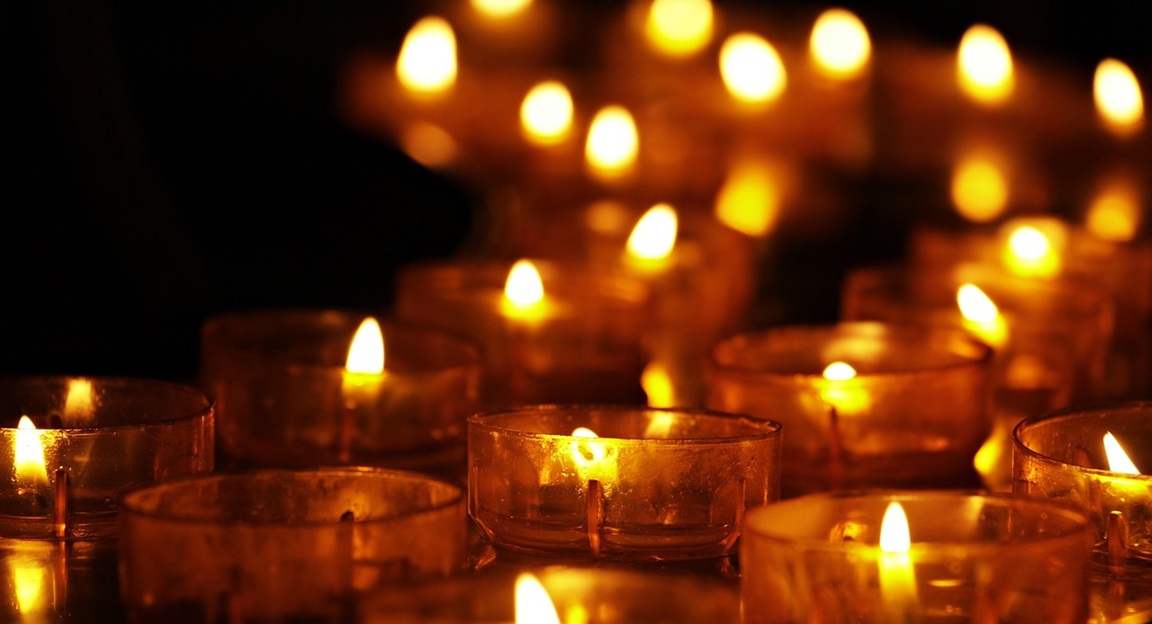
Each of these customs lines up with the evidence. The night-long vigil comes from Bede. The toasts to the dead echo the Norse minni. The food left out recalls Burchard's table set for the three sisters. Even the habit of honouring living mothers and grandmothers finds support in the plural name.
Because Bede places Modraniht on Christmas Eve, the festival also offers something unusual: a pagan observance that sits comfortably beside the Christian one. For families of mixed belief, Mothers' Night can open the Christmas celebrations with an hour set aside for the women of the family. Bede himself saw the two nights as one.
Bringing Mothers' Night Back
For more than a thousand years, Mothers' Night survived as a single sentence in a Latin textbook. It does not need to stay there. The ancient English gave us a name and a date, along with one instruction hidden in a single word: pervigiles, stay awake for the mothers. Everything else is ours to rebuild.
And there is no wrong way to rebuild it. Who we honour is ours to choose: our mums, our grandmothers, our ancestors, women everywhere, the divine feminine, or everyone who ever mothered us, including the aunts, stepmums, foster carers, dads, and friends who stepped in. The date is ours to choose too, whether Christmas Eve, Solstice Eve, or simply the night the family can get together. We can light candles, raise a toast, read a passage, share a meal, throw a party, or keep a vigil of our own. The only thing that matters is that we gather, around a table or on a video call, and remember them.
A festival lives as long as people keep it. If enough of us light a candle for the mothers this December, Mothers' Night will be alive again.
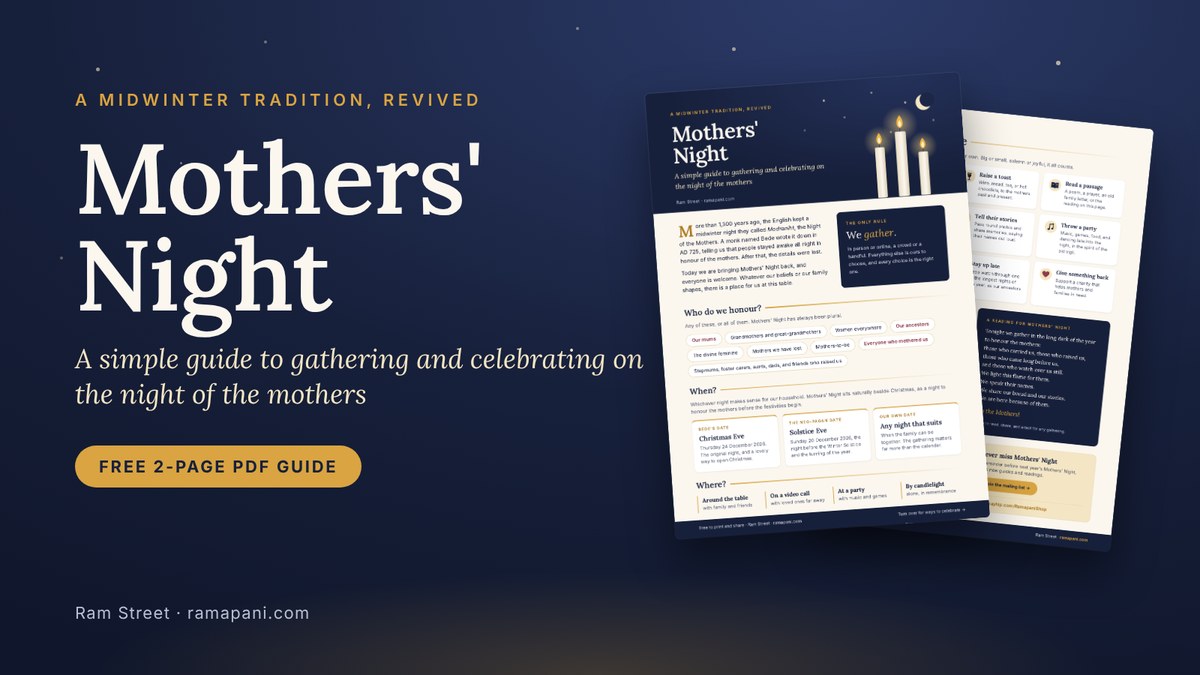
To make a start, we have put together a free two-page guide with everything needed for a first Mothers' Night: who to honour, when and where to gather, nine ways to celebrate, a simple step-by-step celebration, and an original reading to share aloud.
Four ways to help bring the night back:
- Download and share the free guide with family and friends.
- Gather on 20 or 24 December 2026, or any night that suits, and light a candle for the mothers.
- Tell the world how we celebrated, with the hashtag #MothersNight.
- Never miss it: join our mailing list for a reminder before next year's Mothers' Night, plus new guides and readings.
The Vigil Continues
Modraniht rests on a single sentence, yet that sentence tells us more than it first appears. The pagan English kept a night-long vigil at midwinter, on the night that became Christmas Eve, and named it for a gathering of mothers. The altars of the Matronae show that mothers in the plural were honoured in the Rhineland and in Roman Britain for centuries before Bede wrote. Later Norse sources show midwinter feasts at which the living drank to their dead.
Taken together, the evidence supports one reasonable conclusion: our ancestors welcomed the turning of the year by honouring the mothers, divine and ancestral, who watched over their families. That is a sound foundation for a modern festival, provided we keep clear the difference between what Bede recorded and what we have built upon it.
At the darkest point of the year, our ancestors stayed awake for their mothers. Keeping that vigil again asks very little of us, and it connects us with one of the oldest recorded festivals of the English year.
References
[1] Bede (725). De temporum ratione, chapter 15. Latin text in J. A. Giles (ed.), The Complete Works of the Venerable Bede, vol. VI. London: Whittaker, 1843.
[2] Bede. The Reckoning of Time, trans. Faith Wallis. Liverpool: Liverpool University Press, 1999.
[3] Pearse, Roger (2012). “Bede on Yule.” Roger Pearse.
[4] Wikipedia contributors. “Mōdraniht.” Wikipedia.
[5] Tacitus. Germania, chapter 11.
[6] Pliny the Elder. Natural History, 18.221.
[7] Our Merry Folk. “Is ‘Mothers’ Night’ Truly Anglo-Saxon?” Substack.
[8] Lendering, Jona. “Matres.” Livius.org.
[9] Roman Inscriptions of Britain. “RIB 2064. Altar dedicated to the German Mother Goddesses.”
[10] Roman Inscriptions of Britain. “RIB 574. Altar dedicated to the Mother Goddesses Ollototae.”
[11] Simek, Rudolf (2007). Dictionary of Northern Mythology, trans. Angela Hall. D. S. Brewer.
[12] Shaw, Philip A. (2011). Pagan Goddesses in the Early Germanic World: Eostre, Hreda and the Cult of Matrons. Bristol Classical Press.
[13] Snorri Sturluson. Heimskringla, vol. 1, trans. Alison Finlay and Anthony Faulkes. London: Viking Society for Northern Research, 2011.
[14] Medieval Studies, University of Notre Dame. “An Old Norse Saga Guide to Surviving the Holidays.”
[15] Burchard of Worms. Decretum, book 19 (the Corrector).
[16] timedate.org. “December Solstice 2026.”
Ram Street, , Leeds
🌿 Our practice deepens not only through meditation, but also through understanding. These articles offer reflections, guidance, and teachings to support your journey.
I Ching | Beginner Guide Why Meditate? A Practical Guide to Meditation Sound Meditation: A Complete Guide The R.A.M.A. Mnemonic Binaural Beats
✨ Looking for something else?
Introduction to Buddhism Buddhism Doesn't Come With a Biscuit Watching a Live Stream World Karma Game
✨ Lost? Visit the Table of Contents or search the tag cloud.

 Support me on Patreon



 Subscribe without emails | RSS Feed
